When a Window Seat Isn't Really a Window Seat
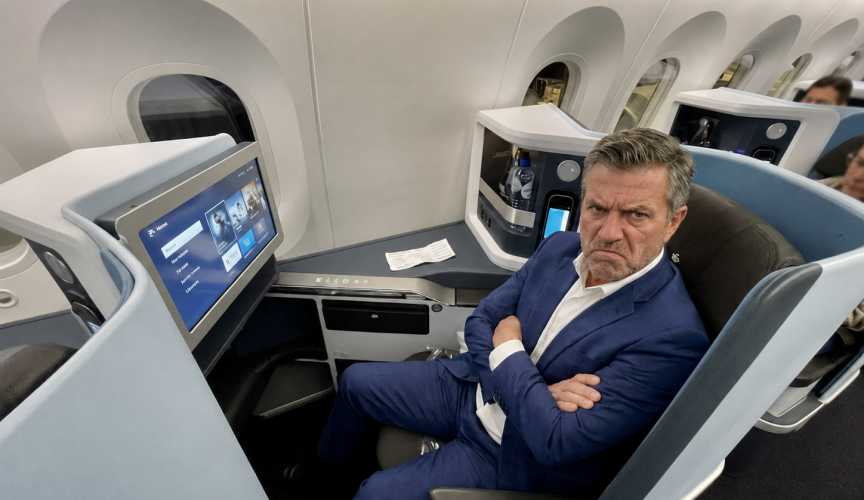
In the past few months, a class-action lawsuit against United Airlines accused the airline of selling “window seats” that don’t actually have a window. Customers paid extra for seats next to the window, but their boarding pass led them to seats where the cabin wall was blank. (United is defending the lawsuit.) The lawsuit (there’s a similar suit against Delta, by the way) claimed airlines were tricking customers by still labeling these seats as “window seats” even though those seats did not line up with an actual window.
A California judge recently ruled that the case can go to trial, pointing out that the airline did indeed call it a “window seat” on both the booking screen and boarding pass. However, it’s worth repeating: This isn’t some kind of final ruling against United. The lawsuit has been allowed to proceed to trial. United contends that as long as your seat is next to the cabin wall, that’s technically a window seat. They feel there is no deception because the term only refers to location, not actual window. Now a judge will decide whether or not customers were actually misled.
The suits filed against United and Delta have shined a light on how airplanes are constructed. Many modern aircraft models (think most Boeing 737s, 757s, Airbus A321 aircraft) have various oddities up front. Trays stored overhead, ducting/wiring behind cabin walls: all these things create seats next to the cabin wall that simply can’t contain a window. Some airlines (American, Alaska Airlines) took care to either mark “no window” seats on their seat maps, or disclose as much via a special pop-up warning to customers. Alaska Airlines even went further and posted an explainer showing passengers exactly which seats lack windows on every plane in their fleet. But not every airline gave customers a heads-up. This led to thousands paying extra for what they thought was an ocean-view seat, and were stuck with a wall.
ALWAYS Double Check Your Seat Has the Amenities You Want
When booking, airlines typically only sell you a seat, not a specific set of amenities. Did you know bulkhead business seats often have less storage underneath compared to regular seats? That your “window seat” might not actually line up with a window on certain aircraft?
Seats you pay for might promise a view, but don’t have access to power outlets or fully recline. These oversights happen to the best of us. Here’s how you can avoid paying for seats with missing windows, or other unpleasant surprises.
The Seat Map Lies
Here’s the truth not many want to admit: most aircraft seat maps lie to you. Or, at least, they don’t show you the whole story. The seats you see on an airline’ seat map look much different than they do IRL. The seat chart is simply a diagram, not a photograph. You can easily mistake two seats that look identical on the chart, but have very different realities when you fly.
There were cases when travelers purchased “window seats” on planes where seats are known to be out of alignment with the windows. Flights they’ve taken showed seats that looked like window seats but were actually a few inches from where the window should be.
This isn’t always the case, but before you buy that ticket it pays to double-check your exact seat location, and confirm you really do have a window.
Consider Using an Alternative Source
Because of problems with official seat maps, many frequent travelers recommend using outside websites to check seats. Sites like SeatMaps or AeroLOPA feature more detailed airplane layouts. Plus some include panoramic seat photos taken by real passengers. They can quickly alert you to problems, like purchasing a seat listed as a “window seat” when a review notes there is no window.
Local user reviews can also warn you of problems like seats with obstructed window views, or fake-windows. Search current seat review sites to see if others warn about “pay-to-select” seats missing windows. For all you know, the bulkhead seat you want might not actually recline. Or provide power. The seat map can’ tell you these things; only outside reviewers or airline staff can do that.
Bottom line: Do NOT assume the aircraft seat map is 100% accurate. Especially if something matters to you, like having a real window. Look up that seat using a third-party seat finder tool. Or, ask a travel agent to double-check your seat includes the amenities you expect.
What Else Can Go Wrong With Seat Selection?
Purchasing seats is tricky, and the “no window” lawsuits prove you should always double-check your seats. Here are a few other things savvy travelers look for before clicking “Buy."
Actual window alignment. Does your seat actually line up with the window? On some planes, “window seats” are set far back from the cabin wall, by a service cabinet or bulkhead. These won’t have a window. Consult a detailed seat map (or SeatMaps/AeroLOPA) to ensure your seat lines up directly with an actual window, versus being set back by a wall.
Legroom/seat recline. Is this an exit row or bulkhead seat? Exit rows often have great legroom. But you can’ stow bags under the seat in front of you, and they rarely recline. Bulkhead seats are often roomier, but make sure they’re right next to galley equipment or an exterior wall. Last row seats can have an ultra little recline, thanks to the wall at the very back of the plane. Bottom line: More legroom often comes with strings attached (no recline, colder windowless seats). Make sure you know the tradeoffs!
Seat configuration. Is your seat forward- or backward-facing? Some premium cabins have weirdly staggered seats: A “window” seat may actually be in the middle of the row, sitting between the aisle and service cabinet. You won’t feel as close to that window as you think. Others have forward-facing seat pairs (legs cross) versus all facing the aisle. Is your seat directly facing the aisle, or will the footwell be offset (such as Singapore Airlines’ angled business class seats, everywhere except the bulkhead)? Review the seat map to ensure you’re not sitting in an odd corner of the cabin due to staggered seating. Or check your row number: gaps in numbering often indicate a missing seat or offset pairing.
Proximity to lavatories/galleys. Where are lavatories and galleys stored? Sitting by the restroom means extra noise, light, and foot traffic from people coming in and out. Most travelers avoid the very back row for this reason alone. On the other hand, sitting closer to the front usually means quieter ride, smoother turbulence and faster cabin service. If you prioritize a peaceful flight or quick deplaning, avoid seats within one row of galley doors and lavatories.
Seat amenities. Does your seat have power, storage, or other perks? Bulkhead business seats sometimes have tons of legroom but lack an under-seat storage pocket. Exit row seats often prohibit personal items under the seat in front of you. Some “seats” are huge ottomans with pillows; others have tiny foot wells that make sleeping difficult. Need power for work/laptop on overnight flights? You might be disappointed if the seat map doesn’t explicitly list power ports. Hint: airlines often include power availability in seat maps or details.
Cross reference your airline seat with a trusted seat review site. One travel writer offers great advice: Don’t just glance at your seat map. Carefully study your plane’ seating chart and notes before making seat selections. A few extra minutes of up-front research can save you from being stuck in a terrible seat. While not every flight will have stellar seats, this definitely matters in business class, since your whole ticket is purchased based on seat comfort!
Don’t Assume ALL Aircraft Seats Are The Same
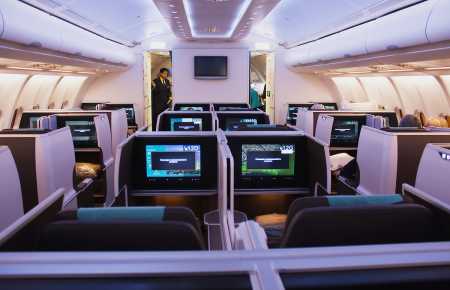
Seat selection also depends on… your aircraft type. Sure, two flights might fly the exact same route using the same aircraft model. But that doesn’t mean you know what seats you’re getting until you do some digging. One airline may fly a Boeing 777-300ER jet with glamorous state-of-the-art lie-flat “suites." The next airline’ 777-300ER might have outdated angled-flat seats.
Seasoned flyers all know what aircraft they book, but many forget to confirm the aircraft beforehand. Aircraft equipment can change at the airlines’ discretion, so be sure you know which airplane you’re flying on before finalizing seats.
Even within a single airline, models may change. You might book one 777 flight with 2-3-2 seating and the very next flight feature 1-2-1 seats. Business class seats vary wildly by aircraft type, route, and layout. In general, long-haul jets (think A350, Boeing 787, 777) have evolved into bigger, better lie-flat business seats. But older planes or short-haul flights may use retrofitted cabins with old seats.
Remember: Your Flight Could Change Last Minute. Do Your Research Ahead of Time.
When you book flights, there’s always a chance your flight could change to a different aircraft (either as a codeshare substitute, or due to unforeseen scheduling reasons). Before you book any flight, find out exactly what aircraft you’re flying on that day, then research that aircraft’s cabin configuration. “Great” rows on one airline might be completely undesirable on another carrier.
A great example is business class seats on domestic US flights. American calls its exit-row premium economy seats “Business Class." United lists first-row economy seats as “United Club Premium Economy." They aren’t business class at all, just closer seats with extra legroom. Know the difference: check your exact flight’ seat layout online before buying. Hint: search by aircraft type (not just airline + route). What’ considered premium on one airplane could be torture on another.
Business Class Seat Width Matters Too!
Another example: Seat width. Many business class seats are over 20-22 inches wide. Others feel miserably narrow at 17 inches or less. Do you know how wide the seats are on your upcoming flight? Learn more about how wide business class seats should be »
Flying an ocean-view middle seat in United’s new Polaris business class? Sounds nice, until you see the seats are only 17.8 inches wide! Taking an international flight with Qatar Business class? Make sure you know the seats lie-flat or you could be sorely disappointed by airline seat basics. Before you book any flight, pull up photos or user reviews of that aircraft type’ seating. If the cabin looks modern (bright lighting/trim, suites with doors) you know you’ll likely be treated to a wonderful flight. If the cabin looks like it never updated its seats since 1998, temper your expectations.
The Same Airline Might Surprise You With “Hidden Gems”
Finally, here’ы the scary part. Airlines can fly the exact same routes, using identical aircraft. They can even charge you the same price for their seats. But the cabins don’t always match, even within the same airline.
You might fly Air Canada business class on one flight and adore their rooms. Then book the exact same route months later, only to discover… oops. Air Canada upgraded their equipment. But you got stuck with an older generation cabin with narrower seats. If you book both flights on BCFlights, we can let you know which flight has upgraded cabins. And we’ll alert you to other perks, like upcoming “no window seats."
“Airlines Changing Seats Without Warning” is EXACTLY Why BCFlights Exists
Why do you need someone checking your flights? Because you shouldn’t have to scour the internet for seat reviews every single time you fly. Or do your own detective work researching every flight. We promise to do that heavy lifting for you. BCFlights knows customers expect their money’ worth when they buy business class seats. So we review every flight and notify you of errors, like when airlines switch equipment without telling you.
The Bottom Line
Seat selection isn’t always as simple as picking a seat, even when flying business class. Recent class action lawsuits like “windowless window seat” have made us all wiser to the potential pitfalls. Here’s one final tip for you: always confirm that your paid-for seat has the amenities you expect. Check the seat map twice, heed tips from seat experts, and utilize tools/travel advisors when needed.
Feel like you’re going nuts sorting it all out? Don’t go at it alone. BCFlights is here to work our behinds off to ensure you get exactly what you pay for: the seat and comfort level you desire, with no surprises and no premium gone waste. Allow us to do the legwork and make sure you relax on your next flight, enjoying the view!