What “Flexible” REALLY Means (And How You Can Still Get Burned)

When you see “flexible” next to an airline fare, it sounds like this:
“I can change anything later without drama.”
But in real life, this is “flexible” really means:
“You can change it, but the fine print decides how much that costs, how much you get back, and how you get it refunded.”
And real life is where travelers get burned on “flexible” fares, even after they pay extra for it.
What “flexible” means (translated from airline speak)
Flexible airfares usually fall into one (or more) of these categories:
1) Changes allowed. Price difference still applies.
This is the biggest one.
Eliminating change fees doesn’t mean you won’t pay a fare difference. And airlines often advertise things like “No change fee!” upfront.
For example, United’s fares and fees page highlights upfront: “Change your flight for free.”
But also clarifies:
“If your new flight costs more than your original flight, you’ll pay the difference.”
Airlines often price seats higher closer to the flight-especially on popular routes / routes with less business class inventory / peak dates.
Meaning that “difference” could sting.
2) Cancel allowed, but refund may come as credit, not cash
Refundability can mean you can cancel, but the refund might come in the form of:
-
Airline credit (usually with an expiration date)
-
A voucher
-
A refund minus penalty
-
“Taxes only” refund (yes, it happens on some fares / markets)
Is a refund sent to your original method of payment? It depends on the fare rules and the scenario.
Domestically in the US, DOT has been clear that airlines must offer refunds (not forcibly offer vouchers) if they significantly change your flight or significantly delay your flight and you choose to not travel.
You can still use this as leverage (nicely!) if something comes up, but that’s not your typical vacation alteration.
3) “Flexible” can just apply to dates, not route or airline or name
“Flexible” can also mean one thing: date and/or time changes. And nothing else.
It might not allow:
-
Changes to origin/destination
-
Changes to airlines
-
Name changes (or allow them, but at high fees/restrictions)
Route changes can technically be possible with some “flexible” fares, but the cost can price most people out.
4) Flexibility might only be valid before certain dates
LOTS of fares have a cutoff. Examples:
-
must change at least X hours before departure
-
can only cancel before check-in
-
higher penalty if within X days of departure
Carriers will typically reserve the right to assess fees differently based on the timeframe of canceling/changing and the fare family. You’ll see this in plain language once you start reading airline fare-rule pages, like Turkish Airlines fare rules.
Why Flexibility Can Burn Travelers
So how does this burn travelers?
Burn #1: “No change fee” can still leave you paying hundreds (to the fare difference)
You change your flight date, only to find out the new flight costs $600 more because it’s priced higher today.
Yes, really.
It’s not a scam. Airlines do this. And that’s why any “change fee waived” or “change is free” should immediately be regarded as two completely different options.
Burn #2: “Refundable” doesn’t always mean “refundable to your card”
Refundable fares can still:
-
Only refund to a travel wallet / credit card
-
Refund minus a cancellation fee
-
Refund only if you cancel within X days of purchase
-
Refund only if you cancel in a certain way (online, not by phone)
That’s true even on carriers who “offer refunds.” Cathay Pacific, for example, notes that rebooking fees would still apply “according to fare rules” and fare differences may apply depending on your fare.
Burn #3: Buying a “flex add-on” from an agency may not change airline policies
This one really hurts.
Third-party sellers might offer “flexibility” as an optional “upgrade” to your booking.
The expectation is that “flexibility” from the agency means flexibility from the airline. But that’s not always the case.
Agency-added “flexibility” could simply be agency policy. Or a warranty-like product that comes with its own restrictions, procedures, and exceptions.
So if something goes wrong with a flight change/cancellation/etc., you’ll find yourself between a rock and a hard place:
-
The airline tells you to talk to your agency
-
The agency tells you to talk to the airline
Travel advisors have been recommending caution here for years, since anything involving a third party can quickly complicate cancellation and refund policies.
Burn #4: Credits expire (or come with restrictions)
Flexible becomes: “Here’s a credit you can use. By a certain date. By the same passenger only. And likely the same airline only.”
This does sound great. If you travel regularly.
And it’s truly horrible, if you only take one trip a couple of times a year, or every few years for that matter.
Burn #5: You can change, but only if your fare class is sold on the new flight
Say, you change your flight. But your fare class “sold out” on the new flight.
You may be forced to rebook at a higher fare class, thus paying the difference again.
Which explains a lot of the irrationality around “flex.”
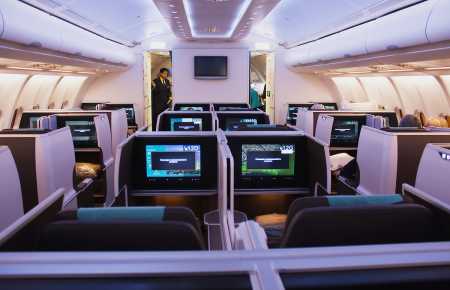
Burn #6: You thought “flexible” included seat protection
One of the reasons business class travelers book is that they want a great seat.
This means:
-
Angled lie-flat vs true lie-flat
-
Old-school 2-2-2s versus modern “suites”
-
Direct aisle access vs middle
-
Bulkheads (which have tradeoffs of their own)
But “flexibility” doesn’t guarantee your seat. It only governs your ticket rules.
Burn #7: You didn’t know about other consumer protections (or unknowingly forfeited)
Here’s a secret: “flexible” isn’t the only thing that matters if your plans change.
Many airlines have 24-hour cancellation policies that are more traveler-friendly than flexible or refundable fares.
You may be eligible for refunds if the airline cancels your flight or significantly alters its schedule and you choose not to accept their alternative.
(United and American both have significantly-changing customers’ schedules as an enumerated reason for refunds if you ask politely.)
In the US, airlines are required to comply with DOT’s “24 Hour rule” when selling tickets. This means you can either hold a reservation at the quoted fare for 24 hours without paying or you can cancel your ticket within 24 hours for no fee.
In Europe, EU regulations offer some reimbursement rights in certain situations if your flight is significantly delayed.
When you buy something “flexible,” you may be giving up on these common protections without realizing it.
“The Flexible” Protection Checklist
If you’re considering paying extra to make your fare flexible, run through this quick checklist before buying:
1) Ask yourself, “If I change my date of travel, do I pay a fare difference?”
If yes (and it probably will be), here’s the next question to ask: “How high could that fare difference realistically be?”
If you booked peak travel dates, traveling last-minute, or are on a route where business class seats sell out quickly, the “difference” could end up costing more than what you saved by booking cheaper.
2) When you cancel, do you get cash back? Or is it credit?
Don’t accept “Itinerary changes are X dollars.” Ask specifically: “Is the cancellation refundable to the original payment method?”
Ask, “Will I get a refund credited to a travel voucher (and when does it expire)?”
Cancellation is allowed, but is the fare actually non-refundable? (Yep. Some “flexible” is basically “changeable,” not refundable.)
3) Read cutoff dates. Internalize penalties.
Popular examples:
-
Сhanges must be made at least 24 hours before flight
-
Сancellations are allowed, but fee applies if done X days before flight
- “No refund after check-in” killer
4) Triple check that flexibility applies to every leg of your itinerary
Does changing one leg change the whole itinerary’s pricing?
See if flexibility applies to every segment.
5) Know your consumer rights during disruptions (so you don’t accept a bad deal)
Want a better deal? Negotiate with the airline using your rights.
If the airline cancels your flight or significantly changes your flight schedule and you choose not to take their solution, you may be entitled to a refund depending on where you fly, who you fly with, and the specific situation.
(The US DOT has been clear that airlines must offer refunds if there is a significant change to the flight schedule or if the airline cancels. You are not required to accept a voucher.)
In Europe, if your flight is significantly delayed, EU rules provide you with certain reimbursement rights.
6) Take a screenshot of the exact conditions listed when you check out.
This right here.
Proof of what you were sold at the time of purchase is the cheapest insurance policy you can buy:
-
The highlighted fare rules.
-
If you purchased any flex add-ons, read the terms again. Are there restrictions? Exceptions?
-
Look specifically for what “refundable” means on that web page you purchased it from.
How All This Is REALLY Important When Deal Hunting on Business Class Flights
Saving money on business class usually means one (or more) of these:
-
Booking far in advance to catch a lower price
-
Choosing an unconventional routing
-
Choosing travel dates to hit pricing sweet spots
So here’s the truth.
If you tweak your flight later (changing dates, routing, canceling, etc.) you’re likely to get re-priced into regular business class pricing.
Yup.
How is “flexible” supposed to help you now?
-
When the fare difference is more than what you saved.
-
Only if your “flexible” fare includes cash refunds (super rare on lower-business fares).
-
If you don’t mind taking an open-ended credit and rebooking later.
Traveling business class and trying to save money is fun. Until it’s not.
How BCflights Protects You from Overselling Flexibility
We get it. Nobody likes surprises, especially when booking travel.
That’s why BCflights is built around providing great flight options WITHOUT making you guess.
Here’s how that helps you avoid “flexibility traps:”
-
No seat surprises. At BCflights we ensure you know your seat outcomes up front. When “business class” means the difference between a true lie-flat seat vs angled bulkhead pod - or first vs business on a fragmented route - we make sure you can filter for exactly what matters to you before buying a ticket. You’re not left guessing if your seat “might” meet your needs. And you don’t have to pay extra to “fix it later.”
-
No unexpected change fees. BCflights advisors (and our automated engine) make sure you know the difference between changeable, refundable, and credit-only before you pay extra for insurance you don’t need.
-
Solid itineraries. Some aggressively-discounted itineraries are great… but easy to rip up with a date change. We help you choose itineraries that hold up better if your plans change.
BCflights.com helps you choose flexibility you can actually use.
Don’t pay extra for “flexibility” you don’t need. Us help you choose the right flights and fares the first time around.
Final Thoughts: “Flexible” Is Just Marketing
No ifs, ands, or buts about it.
Look behind the “flexible” label. Know the rules. Save proof.
And only then decide if it’s really worth it for your situation.
(And when in doubt? Let us help you book without the guesswork.)